Reviewing Christmas Mugs Sublimation Design for Stitch
As an embroidery designer who has spent countless hours digitizing and testing files, I approach every new asset with a critical eye. We often see trends in Illustrations that look stunning on a screen but fail miserably under the needle. Today, I am evaluating the Christmas Mugs Sublimation Design not for its intended sublimation use, but for its potential as a source of inspiration or a base for conversion into a high-quality machine embroidery design. Whether you are an Etsy seller looking to expand your holiday catalog or a hobbyist making gifts, understanding how this visual translates to thread is crucial.
First Impressions and Visual Mood
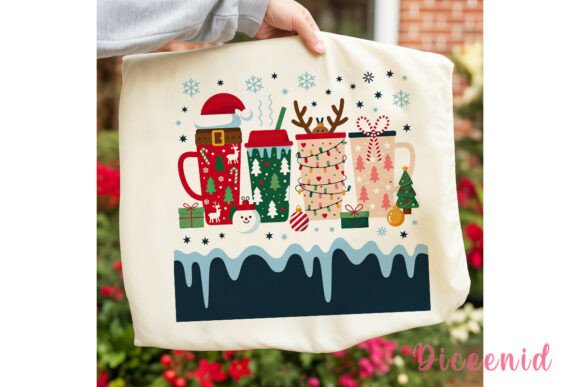
The first thing that strikes me about the Christmas Mugs Sublimation Design is its warmth. It captures that cozy, hygge aesthetic that dominates the winter season. The layout typically features steaming mugs, perhaps adorned with festive patterns like snowflakes, reindeer, or simple geometric knits. For an embroiderer, this is a goldmine of texture potential. The visual personality is inviting and soft, which suggests it belongs on items meant for comfort rather than high-performance athletic wear.
However, a sublimation design relies on color gradients and smooth transitions. In embroidery, we must translate these visuals into satin stitch, fill stitch, and running stitch. The challenge here is maintaining the charm of the original Illustrations while respecting the physical limitations of thread. If the design includes tiny details like steam wisps or intricate mug handles, these will need significant simplification to avoid thread breaks and puckering.
Real-World Application: The Holiday Tote Scenario
Let’s imagine a real-life scenario. You are preparing a batch of custom tote bag design products for a local craft fair. You want to use the motif from the Christmas Mugs Sublimation Design as the central element. A tote bag offers a large, flat surface, which is ideal for showcasing detailed work. Here, you can afford a larger hoop size, allowing you to capture more of the mug’s decorative elements.
In this context, the design performs well if you focus on bold shapes. The body of the mug can be filled with a dense fill stitch to mimic ceramic solidity, while the handle might benefit from a thicker satin column. The "steam" rising from the mug, however, should be rendered with delicate running stitches or left as negative space to prevent a messy, tangled look. This approach ensures the finished product looks professional and intentional, rather than like a failed attempt to replicate a photograph.
Apparel and Textured Fabrics
Moving beyond totes, consider sweatshirt embroidery. A fleece or cotton-blend sweatshirt provides a plush background that complements the cozy theme of the Christmas Mugs Sublimation Design. However, textured fabrics present challenges. The pile of the fleece can swallow small details. If the original design has fine lines or small text, they may disappear. In this case, I recommend increasing the stitch density slightly and using contrasting thread colors to ensure visibility.
For baby embroidery projects, such as a onesie or a burp cloth, simplicity is key. Babies move, and their clothes undergo frequent washing. A complex design derived from this sublimation art might become distorted after a few cycles. Instead, isolate the simplest element—perhaps just the mug shape with a single snowflake—and use a soft, flexible stabilizer to keep the fabric comfortable against sensitive skin.
Where to Exercise Caution
Not every application is suitable. While the Christmas Mugs Sublimation Design is visually appealing, it requires careful adaptation for certain surfaces. Curved surfaces like caps are tricky. The distortion caused by the curve can warp the perspective of the mug, making it look uneven. If you must use it on a hat, keep the design small and centered, avoiding wide, sweeping elements that span the entire front panel.
Additionally, be wary of dark fabrics. Sublimation designs often rely on light backgrounds to show detail. On black or navy fabric, you will need to use bright, high-contrast thread colors. Avoid subtle pastels unless you are using a white underlay or applique method. Speaking of which, an applique design approach could be excellent here. Using felt or cotton fabric for the mug body and only stitching the outline and details can reduce bulk and save time, making it a viable option for a small shop product line.
Enhancing Brand Value and Customer Trust
From a business perspective, how you execute this design affects your brand consistency. A sloppy embroidery job can undermine customer trust, no matter how cute the original concept. By taking the time to test the design on scrap fabric, you demonstrate professionalism. Check how the thread colors interact with the fabric texture. Does the red thread bleed into the white? Is the stabilizer visible from the back?
Using this design effectively can boost buyer engagement. Holiday-themed items are emotional purchases. A well-executed embroidered mug motif on a kitchen towel or apron feels personal and thoughtful. It elevates a standard personalized gift into a keepsake. For commercial embroidery clients, such as cafes or boutiques, this design can serve as part of a cohesive seasonal branding strategy, provided it is adapted to match their specific color palette.
Practical Designer Notes for Execution
Before you commit to producing a full run of items using the Christmas Mugs Sublimation Design as your reference, follow these practical steps:
- Test on Scrap Fabric: Always stitch out a sample on the exact material you plan to use. This reveals issues with tension and density.
- Check Contrast: View your design in black and white. If the details disappear in grayscale, they will likely get lost in the stitching too.
- Review Stitch Density: Ensure the fill areas are not too dense, which can cause puckering, especially on lighter fabrics.
- Confirm Hoop Size: Make sure your machine’s hoop can accommodate the desired size without needing to re-hoop, which risks misalignment.
- Inspect Small Details: Tiny elements like sprinkles or small text may need to be removed or enlarged to be stitchable.
- Licensing Check: Since this is originally a sublimation design, confirm the license terms. Ensure you have the right to use it as a reference for creating derivative embroidery works or selling finished items.
Ultimately, the Christmas Mugs Sublimation Design offers a strong foundation for holiday creativity. It is not a plug-and-play digital embroidery file, but rather a visual prompt that requires skilled interpretation. By respecting the mechanics of embroidery and focusing on clarity and durability, you can transform this illustration into a tangible, high-value handmade product. Whether for a craft business or personal joy, the result is a festive item that stands up to both scrutiny and use.